Monday, September 13, 2010

RIP George Williams (May 12, 1926 - September 8, 2010)


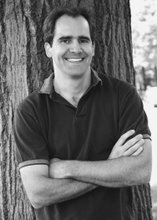
Evolutionary Biologist George Williams passed away last week. I credit George with being a primary inspiration in my career choice. His Adaptation and Natural Selection was a revelation to me as it was one of the first books I read on evolutionary theory.


I have only one George Williams anecdote of note. In 2004, I attended a symposium at Stony Brook University in honor of George. In a break between the sessions, I went down to Port Jefferson to browse around and found a wonderful used book store on a side street near the waterfront. In the science section, I found a number of old texts with William's imprimatur on the title page. The best of these was a liberally annotated copy of Alex Comfort's The Biology of Senescence. I found this pretty neat since William's first major work dealt with the evolution of senescence. I bought the lot and have them in my office library to this day.

Here is an autobiographical piece from George that was posted to evoldir, an evolution listserv, by Martin Daly. Its original source was The Edge.
My interest in evolution started in the summer of 1947, when I spent six weeks in the Painted Desert with a paleontologist named Sam Welles, who had a group of students there, officially in a summer course, but we spent most of the time swinging picks and shovels, digging fossils, as part of Welles' research project. He was a specialist in Triassic amphibians. Evenings were spent sitting around the campfire talking about things like evolution. For the first time in my life, people - real biologists, real scholars - were willing to sit and listen to my opinions. I was twenty one years old. I certainly became interested in many aspects of evolution then, and shortly after that I signed up at the University of California at Berkeley for a course in evolution with Ledyard Stebbins, who at the time, and for quite a while thereafter, was the world's primary expert in evolution with respect to things botanical. Stebbins' course introduced me to Theodosius Dobzhansky's Genetics and The Origin of Species. Stebbins was great, but Dobzhansky's book was what got me interested in natural selection as a process.

At the University of Chicago, my job was strictly teaching. I was in their early-entrant undergraduate program - taught freshmen and sophomores biology. They had a great-books approach. We read Darwin, Mendel, and others. Also I attended seminars by people such as Alfred Emerson, the termite specialist and recognized authority on things evolutionary. I found his ideas absolutely unacceptable. That motivated me to do something. If it was biology Emerson was discussing, I would be better off selling insurance.

I remember especially his lecture on the role of death in evolution. He was all in favor of death, and said that the reason we grow old and die is to make room for successors, so that they can have a chance. This seemed so totally impossible, given that evolution proceeds by natural selection. There was absolutely no logical way you could reconcile his ideas with Darwinism, even though he claimed to be a Darwinist.

This initiated my first theoretical obsession: the evolution of senescence - the decline in adaptive performance with age. You can't run as fast at sixty as you could at thirty. On the way home that evening, talking about the problem with my wife, I independently came up with an idea that Peter Medawar is chiefly responsible for and published in 1952, although he may have published something that foreshadowed it in the 1940s - and that is that the effectiveness of selection in maintaining adaptation is essentially the product of reproductive value and survival.

The survival factor is easier to appreciate. If you're more likely to be alive at thirty than at sixty, then selection will be more effective at maintaining adaptation at thirty than at sixty. At an age you'd be extremely unlikely to survive to, such as one hundred years old, adaptation would be a lost cause, and selection wouldn't be concerned with it.

As the effectiveness of selection declines, the effectiveness of its products declines. This explains the rising mortality rate that comes with age. It seemed to me at the time, and still does, that this is an inevitable conclusion, arising from just the simple fact of mortality. If there's any possibility of dying, at any age, then you're less likely to be alive at a later age than you are at an earlier age.

Another one of Alfred Emerson's ideas was that evolution is much more concerned with cooperation than with competition. It seemed to me to be very much the other way around, and that there was something very special about the social insects which accounted for their extreme cooperativeness. That special thing was their kinship - high levels of kinship within the colony. This was the focus of a theoretical paper I published in 1957. It was a model of natural selection between families; now I think that's a silly way to do it, but at the time I wasn't smart enough to think of the kin-selection idea, which was some years later worked out by William D. Hamilton. In extreme models, this kind of selection can lead to things like forgoing reproduction, if in so doing you can, for example, more than double the reproduction of a full sib. The full sib is half as good as you are genetically - that is, from the standpoint of getting your genes into future generations. In the social insects, of course, sisters may have a three-quarter relationship, because if they share a father then all the genes they get from the father are exactly the same.

These early experiences kindled an interest that has never gone away, and resulted in Adaptation and Natural Selection, my first book-length publication on this and related matters. By then I had worked on the problem of senescence and on cooperation between relatives, but I had a long list of other problems that interested me.

At that time, group selection was not explicit. V.C. Wynne- Edwards' big book on group selection - Animal Dispersion in Relation to Social Behaviour - came out in 1962, but I discovered it only after I was largely finished with Adaptation and Natural Selection. I submitted the manuscript in late 1963, and it referred to Wynne-Edwards' work, but I brought it in as a late revision of the manuscript.

There was some group-selection modeling prior to that, and explicit use of group-selection ideas by Alfred Emerson and A.H. Sturtevant, in paper published in 1938. In 1945, Sewall Wright presented a group-selection model, in a book review of George Simpson's Tempo and Mode in Evolution. But the group-selection model wasn't easy to find if you didn't know about it already. Mostly, the group-selection idea was necessary to the way people were thinking about adaptation, although - and I find this extremely strange - they didn't realize it. They kept talking about things being for the good of the species. If it's for the good of something, and it's to arise by natural selection, it has to be produced by the natural selection of those somethings. In other words, one species survives as another one goes extinct. The basis of Wynne-Edwards' work on group selection was that you can't have things that work for the good of the group unless you have selection at the level of groups. What he was doing was looking for selection at the level of local breeding populations, and whether they could be called separate species wasn't particularly relevant.

To most people's satisfaction, Wynne-Edwards has been proved wrong. Not that there's no selection at levels higher than the individual or the family, but simply that his particular formulation isn't likely to be a very strong force in evolution. It's now generally conceded that the phenomena he was explaining by this mode of thought are much better explained by other processes: by selection at lower levels, selection among individuals.

For instance, any reproductive restraint - anytime it looks as if individuals aren't reproducing at the maximum possible rate - is explainable simply on the basis of an individual optimal-resource allocation model. You don't kill yourself trying to do something today if working at it a little bit more easily will enable you to try again tomorrow. Maybe you don't do it at all today, if conditions will be much better tomorrow. This kind of thinking explains the fact, for instance, that birds do not necessarily lay as many eggs in a breeding season as they demonstrably might. The allocation of their resources will be much more effective for reproduction with a lower-level expenditure on eggs, which will enable them later to spend more on feeding the young and later still, next year, having another breeding season.

There's a great conceptual deficiency in my earlier work, one that I shared with just about everybody else who was working at the time. I failed to realize what a tremendous problem the existence and prevalence of sexual reproduction is. I got interested in that in the early seventies, and I published a book in 1975 titled Sex and Evolution. There are a lot of complications that I didn't appreciate at the time, but John Maynard Smith and Bill Hamilton and many others have advanced our understanding tremendously in the last twenty years.

Richard Dawkins went in the right direction when he made the distinction between replicators and vehicles. David Hull's substitution of the term "interactor" for "vehicle" is a good idea, but that's a minor terminological matter. Dawkins didn't go nearly far enough in making that distinction, because he defines a replicator in a way that makes it a physical entity duplicating itself in a reproductive process. This is fine, but the important distinction lies at a still more basic level. He was misled by the fact that genes are always identified with DNA.

Evolutionary biologists have failed to realize that they work with two more or less incommensurable domains: that of information and that of matter. I address this problem in my 1992 book, Natural Selection: Domains, Levels, and Challenges. These two domains will never be brought together in any kind of the sense usually implied by the term "reductionism." You can speak of galaxies and particles of dust in the same terms, because they both have mass and charge and length and width. You can't do that with information and matter. Information doesn't have mass or charge or length in millimeters. Likewise, matter doesn't have bytes. You can't measure so much gold in so many bytes. It doesn't have redundancy, or fidelity, or any of the other descriptors we apply to information. This dearth of shared descriptors makes matter and information two separate domains of existence, which have to be discussed separately, in their own terms.

The gene is a package of information, not an object. The pattern of base pairs in a DNA molecule specifies the gene. But the DNA molecule is the medium, it's not the message. Maintaining this distinction between the medium and the message is absolutely indispensable to clarity of thought about evolution.

Just the fact that fifteen years ago I started using a computer may have had something to do with my ideas here. The constant process of transferring information from one physical medium to another and then being able to recover that same information in the original medium brings home the separability of information and matter. In biology, when you're talking about things like genes and genotypes and gene pools, you're talking about information, not physical objective reality. They're patterns.

I was also influenced by Dawkins' "meme" concept, which refers to cultural information that influences people's behavior. Memes, unlike genes, don't have a single, archival kind of medium. Consider the book Don Quixote: a stack of paper with ink marks on the pages, but you could put it on a CD or a tape and turn it into sound waves for blind people. No matter what medium it's in, it's always the same book, the same information. This is true of everything else in the cultural realm. It can be recorded in many different media, but it's the same meme no matter what medium it's recorded in.

In cultural evolution, obviously, the idea of a coffee cup or a table is something that persists. The coffee cups and tables don't persist, they recur as a result of the persistence of the information that tells people how to make coffee cups and tables. It's the same way in biology: hands and feet and noses and so on don't persist, they recur as a result of genetic instructions for making hands and feet and noses. It's the information that lasts and evolves. Obviously, it's because of the physical manifestations of the information that we know about the information. Dawkins has had trouble in convincing people, and this stems from his thinking of the gene as an object - of emphasizing the importance of replication rather than of proliferation of information.

Until you've made the distinction between information and matter, discussions of levels of selection will be muddled. Comparing a gene with an individual, for instance, in discussions of levels of selection, is inappropriate, if by "individual" you mean a material object and by "gene" you mean a package of information. It should be "gene" and "genotype." You have to look at levels of selection in both of these domains, and realize what you're doing. Comparisons of levels of selection should be within the same domain.

Having made the domain distinction, you then go to levels, and you find that in the two domains the levels do not correspond exactly. As a general rule, if we restrict our attention to sexually reproducing populations, there are only two possible levels of selection in the informational - or what I call the codical - domain: the gene and the gene pool. Selection can operate on alternative genes within a population; selection can act on alternative gene pools in a biota. Both of these are evolutionary factors that can produce interesting effects.

In the material domain, on the other hand, selection can operate at the level of alternative individuals, in the usual sense of "individual," or on groups of individuals - such things as insect colonies, or families whether they form elaborate colonies or not. These temporary groupings of individuals give rise to what the biologist David Sloan Wilson calls "trait-group selection," and also to selection between alternative populations. That's the physical basis for selection between gene pools. But the physical levels of selection below that level - for instance, between competing colonies of the same species of social insects - don't have a corresponding level in the codical domain. The events in the competition between insect colonies are recorded at the level of a gene. There are no sufficiently persistent genetic differences among colonies for effective selection in the codical domain. I believe David Wilson agrees with that. He's interested in selection among the interactors in the material domain.

The main messages of my 1966 book are now generally accepted. This would have been the case whether I wrote that book or not. The ideas would have prevailed by today, because people like Hamilton, Dawkins, Robert Trivers, and others were doing work at the same time, more or less, and if there hadn't been a single book in the mid-sixties to deal with the idea of levels of selection, I think one of those people probably would have written it. Dawkins' book The Selfish Gene is very much a case in point. It advanced things a lot further than mine did.

My lasting contribution will be for a clarification of the problems of the two domains and the levels of natural selection. I'll also be known as one of the people who first became interested in explaining why there is such a thing as sexual reproduction, and why it's so widespread.

In the future, breakthroughs in evolutionary biology may come in the field of paleontology. Fieldwork now going on will be recognized several decades from now as having provided extremely important information. People I've never heard of are out there digging, looking for pollen grains in lake sediments, or dusting off trilobites from Paleozoic shales. Other important insights will come from people working in traditionally unrelated fields - for instance, on things like conflict between genomes. The most immediately enlightening and convincing work that's going on now is in explanations being advanced for things like genetic imprinting - that is, the fact that in early development the activity of the gene depends upon whether it came from the mother or the father. I'm most involved in a recent publication by the biologist David Haig on genetic conflict in human pregnancy. This may not in fact be the clearest example of genetic imprinting, and certainly it isn't going to be the one most easy to work with, but it's work of this nature that's likely to get people thinking seriously about levels and domains of selection.

My recent work concerns what I call Darwinian medicine - the general applicability of evolutionary ideas in medical research, practice, and education. It arose in conversations with Randolph Nesse, a medical doctor and professor at Ann Arbor. Another important factor for me was a paper by Paul Ewald in 1980.

Ewald started life as an ornithologist and got interested in medicine one day when he got sick. It was an intestinal pathogen that got him - not quite as dramatic as Alfred Russel Wallace getting his inspirations during an attack of malaria. Paul started thinking about the evolutionary interaction between hosts and parasites. That led to his paper on how to use evolutionary ideas to interpret the observations one makes in infectious diseases - the symptoms and signs seen in the host. It struck me that these were extremely important ideas, which should be tremendously useful in medicine.

I had already been thinking about senescence and life histories in general, and certainly senescence is a medical problem. From general population genetics I knew something about inherited disorders. These are quite different kinds of medical problems, but all of them are susceptible to evolutionary interpretations, in ways that it seems to me would benefit the practice of medicine. The more I got to thinking about it, and talking to Randy Nesse about it, the more I realized that there is no kind of medical problem for which the theory of natural selection will not be relevant, for curing or preventing a disease.

One of Paul's most important insights is that AIDS is probably not a new disease, in the sense of HIV being a new pathogen. What we're dealing with is a pathogen that has rapidly evolved a much higher level of virulence because of its environmental circumstances. It may have been an organism that, prior to two or three decades ago, was transmitted primarily from parent to offspring - and maybe rarely between sex partners - and therefore the evolutionary factors acting on its virulence necessarily kept it very nonvirulent. Individuals with this virus had to survive long enough to reproduce, or the virus wouldn't be transmitted.

Now, take people with this virus and move them into a completely different social situation, in which families are disrupted and men are being served mainly by prostitutes who are dealing with hundreds of men per year. You now have a situation in which the opportunity for the transmission of the disease to another individual no longer depends upon the long-term survival of the individual that has it. Therefore the restraints on its virulence are removed. Within an individual, the more virulent the strain, the better it will do, because the more virulent the strain the more of that particular virus there will be for transmission to the next individual. We've shifted the balance of selection on this virus from mainly between individuals - between hosts - to within hosts. Within hosts, there's normally selection for increased virulence. Suddenly the virulence of the HIV went way up. This is just one example. There are many, many examples of human activities that influence the evolution of virulence in our pathogens.

There are many other ways in which evolutionary ideas can be brought to bear on medicine - for instance, in dealing with the mismatch between our evolved adaptations and the environment in which we now find ourselves. This mismatch is probably the main source of medical problems today.

In twenty or thirty years, medical students will be learning about natural selection, about things like balance between unfavorable mutations and selection. They will be learning about the evolution of virulence, of resistance to antibiotics by microorganisms, they will be learning about human archaeology, about Stone Age life, and the conditions in the Stone Age that essentially put the finishing touches on human nature as we now have it. These same ideas then will be informing the work of practitioners of medicine, and the interactions between doctor and patient. They'll be guiding the medical research establishment in a fundamental way, which isn't true today. At the rate things are going, this is inevitable. These ideas ought to reach the people who are in charge - the doctors and the medical researchers - but it's even more important that they reach college students, especially future medical students, and patients who go to the doctor.

They'll have questions to ask that doctor, who will have to have answers. I hope this set of ideas produces a certain amount of bottom-up influence on the medical community, via students and patients. But I hope also that there's some top-down influence - that it will be influencing the faculties in medical schools and the researchers on human disease.
Here is an interesting interview with George from 1997.

Here are a few obituaries from Michael Ruse, Richard Dawkins, the NCSE, and Carl Zimmer.

Saturday, March 13, 2010

Top 50 Biology Research Blogs

Medicalicious has just selected a list of their favorite biology blogs. I am honored that The Evilutionary Biologist was considered for the list. The full list is available here. From the posting:

If you are seeking a scientist who focuses on biological research to learn more about their skills, you need look no further than the Internet. Hundreds of scientists are blogging about their research daily, in every biological specialization imaginable. In this instance, the top 50 biology research blogs listed below focus on longevity and aging, evolution, biotechnology, neurosciences and microbiology.

Friday, March 5, 2010

Interview with Victor Ambros

There is an interesting interview with Victor Ambros in the latest edition of PLoS Genetics.

Here's his thoughts on his Lasker Award:

And so it has very little to do, frankly, with the particular person getting the award. What the award represents is a process that involves interactions amongst many, many people. And the end, one person ends up getting the award. It's really important to try to acknowledge that and understand the fact that really everything that happens in science, including the discoveries that people try to acknowledge by awards, are really the products of this confluence of people's histories and people's interactions. I really believe that science gets done by people with average abilities and talents, for the most part, and when something special happens, enough so that people want to acknowledge it with an award, it was really…in large part…luck!

We try to say to the public, here's an award for somebody who's really, really special. But actually, it's not the
somebody who is really special, it's the science that is special. The way we do science, and the way it works is so amazing. I wish non-scientists would better understand this. That science is a community exercise, that it involves people interacting, that it involves a lot of good fortune in the context of people trying to do something really carefully and following curiosity. That's why it works so well!

Words to live by!

Friday, January 22, 2010

Top 10 Funny Science Videos

Very dorky science videos.

Marshall Nirenberg (April 10, 1927 – January 15, 2010)


Marshall Nirenberg passed away recently from cancer. Nirenberg is famous for "deciphering" the genetic code. I wrote a piece about him earlier in this blog. In the classic experiment with Heinrich Matthei, the duo showed that nucleic acid codon poly-uracil (UUU) coded for the amino acid phenylalanine.


According to a New York Times Obituary, Nirenberg was “enthusiastic and magnetic. He had an idea every two or three minutes."

NIH has an excellent exhibit on the genetic code discovery.

Nirenberg shared the 1968 Nobel Prize with Robert Holley and Gobind Khorana.

Nirenberg's collected papers can be found at the National Library of Medicine.

Wednesday, January 20, 2010

Parasite of the Day


My colleague at the American Museum of Natural History, Susan Perkins, has started an ambitious new blog. She will be introducing a new parasite to the world each day in Parasite of the Day. Unfortunately, perhaps, for the hosts of the world, Susan has plenty of subject matter and should be busy for quite some time. A recent paper in PNAS (Dobson et al. 2008) states that although they "estimate that there are between 75,000 and 300,000 helminth species parasitizing the vertebrates. [They] have no credible way of estimating how many parasitic protozoa, fungi, bacteria, and viruses exist. At least the helminths parasites of vertebrates will keep Susan busy for the next 821 years or so.


The photo above is of Neoechinorhynchus emyditoides a species of acanthocephalan, or thorny-headed worm, by Mike Barger.

Wednesday, December 30, 2009


Ava at the Reef Tank interviewed me on my thoughts on evolution and fish husbandry. I confess that while I absolutely love aquariums, I don't have much by way of aquacultures at present. We've got a few really-easy-to-care-for Bettas and Telescope goldfish, but that is about it. I'm fairly lazy when it comes to maintaining animals in my lab and house, and try to chose animals that require minimal care (Leopard slugs anyone?). I did buy a female Betta with some breeding in mind, but it turned out to be a wild-type male. I was really disappointed since Bettas have such interesting breeding behaviors. Males make large bubble nests with their own saliva.


After female Betta has spawned, the eggs float up into the nest from below or the male Betta carries them there in its mouth. The male fertilizes the eggs and initiates embryo development. The male Betta will guard the nest for the next 24-48 hours until the eggs hatch. He also keeps a close watch on the eggs and will retrieve any eggs or fry that fall from the nest. He will also repair the nest by adding bubbles where needed. After the fry hatch (in 24-48 hours) the male will tend the fish for the next couple of weeks. How cool is that?

Tuesday, December 22, 2009

You and Your Research

Richard Hamming is not a household name. As a long-time Bell Labs scientist, Hamming made lasting impacts on mathematics, computer science, and engineering. He also gave one of the best talks I have come across for anyone pursuing/interested in pursuing a career in science. This talk, titled "You and Your Research" was presented to the Bell Communications Research Colloquium Seminar on 7 March 1986. It could be titled "How to do Great Research".

Hamming first discusses his motivation:

At Los Alamos I was brought in to run the computing machines which other people had got going, so those scientists and physicists could get back to business. I saw I was a stooge. I saw that although physically I was the same, they were different. And to put the thing bluntly, I was envious. I wanted to know why they were so different from me. I saw Feynman up close. I saw Fermi and Teller. I saw Oppenheimer. I saw Hans Bethe: he was my boss. I saw quite a few very capable people. I became very interested in the difference between those who do and those who might have done.
Hamming found that the major difference between good and great is largely one of attiHe summarizes his findings:
In summary, I claim that some of the reasons why so many people who have greatness within their grasp don't succeed are: they don't work on important problems, they don't become emotionally involved, they don't try and change what is difficult to some other situation which is easily done but is still important, and they keep giving themselves alibis why they don't.
In other words, ask yourself three questions:

1. What are the most important problems in your field?

2. Are you working on one of them?

3. Why not?

Tuesday, October 20, 2009

Virus Evolution

Here is a short video on virus evolution from the Instituto de Biologia Molecular y Celular de Plantas and the Santa Fe Institute Professor Santiago Elena.

Synopsis

Viruses can evolve fast and sometimes adapt quickly to a new host species. For example, an influenza virus that normally infects birds can become adapted to humans. The tobacco etch virus normally infects tobacco plants. Professor Santiago Elena from Valencia wants to find out what it takes to make the tobacco virus capable of infecting another plant: Arabidopsis. The movie shows how Santiago Elena does the evolutionary experiment and we see that after 30 rounds of experimental evolution the virus is indeed adapted to the new host plant! After the experiment, Elena looks at the genetic code of the adapted virus and finds that there are just three differences between the genetic code of the normal (tobacco loving) virus and the virus that is now adapted to Arabidopsis.

Thursday, September 17, 2009

Lawrence Basil Slobodkin (1928-2009)

Larry Slobodkin, eminent ecologist, founding chairman of the Stony Brook University Ecology and Evolution Department, and Fellow of the American Academy of Arts and Sciences passed away last Saturday.

Larry's impact on the science of ecology is immeasurable, particularly with regards to linking population dynamics with ecosystem ecology. A concrete example of this is his famous HSS paper. With coauthors Nelson Hairston Sr. and Jerry Smith, Slobodkin use a simple observation (the world is green) to deduce that predators limit herbivore abundance, thus allow plants to flourish.

Beyond his scientific contributions, Slobodkin is reknown for creating the world's first graduate program in ecology and evolutionary biology (at Stony Brook University). Many of the best and brightest in the field have either taught or schooled in this program.

Larry's (academic) nephew, ecologist Mike Rosenzweig, wrote a great piece about him for Evolutionary Ecology Research. Larry contributed this autobiographical article. More articles in the EER special issue in his honor are available here.

NY Times Obituary


Update: Carol Reid wrote a nice tribute to Larry here.

Update: An obituary was published in PLoS Biology.

Thursday, September 10, 2009

Phage Hunters

18 freshmen students have enrolled in my Genomics Research Experience course aka Phage Hunters. This course is supported by the Howard Hughes Medical Institute's Science Education Alliance. My students have begun the process of isolating novel Mycobacteriophages by collecting soil samples from the wild and plating them on lawns of Mycobacterium smegmatis, a M. tuberculosis relative. Unlike M. tuberculosis, M. smegmatis is non-pathogenic and is easier to grow and manipulate under experimental conditions. Nonetheless, by virtue of their close phylogenetic relationship, the two bacteria are quite similar in many respects. Thus, M. smegmatis may be an excellent model for deriving treatments against tuberculosis.

Collecting Mycophage is already paying handsome dividends. Albert Einstein College of Medicine Professor William Jacobs isolated a phage he named the Bronx Bomber from soil from his own backyard in the Bronx. With University of Pittsburgh Professor Graham Hatfull, Jacobs characterized this phage in the laboratory. They found that this phage is able to insert itself into the genome of M. smegmatis at a very specific location in the groEL1 gene, thus disabling the gene. One of groEL1's functions is to facilitate the production of biofilms.

Biofilms are extracellular polymeric substances that aid and protect microbes. They allow bacteria to persist in the face of antibiotics. It's estimated that 80% of infections involve biofilm formation. While biofilm formation in tuberculosis has not yet been uneqivocally confirmed, M. tuberculosis does have a groEL1 gene with 90% similarity to that of M. smegmatis.

If the phage is able to infect M. tuberculosis or is mutated to infect M. tuberculosis, it is possible that some day the phage could be used as therapy against tuberculosis. As one of the three primary diseases of poverty, tuberculosis has a devastating impact in the developing world.

Top Photo: Bxb1 is a mycobacteriophage that was originally isolated from Dr. Jacobs' backyard in the Bronx. It is affectionately called "The Bronx Bomber" as it forms large plaques on a plate with lawn of Mycobacterium smegmatis cells (left panel). The Bxb1 phage plaques are characterized with their clear centers surrounded by turbid rings. The turbid rings represent lysogens (i.e. M. smegmatis bacterial cells into which Bxb1 has integrated) of M. smegmatis that are resistant to superinfection with Bxb1 phage. These lysogens are defective in biofilm formation. A transmission electron micrograph of Bxb1 is shown in the right panel. Courtesy of Jordan Kriakov, William R. Jacobs, Jr.

Middle photo: Image shows Mycobacterium smegmatis growing as a biofilm on a liquid surface, with its characteristically textured folds. Courtesy of Anil Ojha, Tom Harper, Graham Hatfull.

Thursday, July 2, 2009

Bigfoot or Mistaken Identity?

Ecological Niche Modeling is a great tool for conservation biology, phylogeography and evolutionary biology. However, as Jeff Lozier and colleagues point out in a paper in Journal of Biogeography, the models are only as good as the data they are based on.

The basic premise of the ENM approach is to predict the occurrence of species on a landscape from georeferenced site locality data and sets of spatially explicit environmental data layers that are assumed to correlate with the species’ range.
This is fine if the researchers themselves collect the data, but many studies rely on publicly available online databases. While no doubt the validity of most of this data is unimpeachable, there can be instances of misidentification or poor taxonomy. These discrepancies have the potential to significantly skew the results. As an extreme example, the authors point to Sasquatch, the North America's purported other large primate. Using data from the Bigfoot Field Researchers Organization, Lozier et al. predict the Sasquatch's range in the Western US (see figure above).
(T)he ENM shows that Bigfoot should be broadly distributed in western North America, with a range comprising western North American mountain ranges such as the Sierra Nevada Mountains, the Cascades, the Blue Mountains, the southern Selkirk Mountains, and the Coastal Range of the Pacific Northwest.
Interestingly, Bigfoot's supposed range overlaps considerably with another large American mammal, Ursus americanus, the Black Bear. Naturally, it is quite possible that the Black Bear and Sasquatch could share similar habitat requirements, but perhaps a more parsimonious hypothesis is that Black Bears are being misidentified as Sasquatch.
Thus, the two ‘species’ do not demonstrate significant niche differentiation with respect to the selected bioclimatic variables. Although it is possible that Sasquatch and U. americanus share such remarkably similar bioclimatic requirements, we nonetheless suspect that many Bigfoot sightings are, in fact, of black bears.

Photo of mangy bear
The take-home message is that scientists should carefully scrutinze literature records and/or public databases. Validate taxonomy. Rely on recognized experts. Don't be afraid to disregard questionable specimens. Ecological Niche Modeling has a bright future, but like any technique it can be properly or improperly applied. The authors should be commended for their clever approach to pointing out the need for scrutiny.

Lozier, J., Aniello, P., & Hickerson, M. (2009). Predicting the distribution of Sasquatch in western North America: anything goes with ecological niche modelling Journal of Biogeography DOI: 10.1111/j.1365-2699.2009.02152.x

ResearchBlogging.org

Saturday, June 13, 2009

Left-handed Snails Beat Snail-eating Snakes

Masaki Hoso reported that the snail-eating snake, Pareas iwasakii, has lopsided jaws to better enable it to tug snails out of their shells. Most snails have shells that whirl clockwise (to the right) so P. iwasakii has evolved an upper jaw with more teeth on the right side than the left. In a sample of 28 snakes, the Hoso found each one had an average of 17.5 teeth on its left jaw and 24.9 teeth on the right.
The lack of symmetry helps the snake pry the snails out of their shells with alternate retractions of their left and right jaws, a technique called "mandible walking".

Here's a video of the snake preying upon a "right-handed" snail.


The snail, Satsuma c. caliginosa, has countered the snake's adaptation by evolving a left-handed swirling pattern.

Hoso et al. write in Biology Letters:
In addition, our experiments demonstrate a defensive function of sinistrality for snails against snake predators. Sinistral variants have been generally considered to suffer selective disadvantages on account of the overwhelming predominance of dextrals (Vermeij 1975, 2002; Johnson 1982; Gould et al. 1985; Asami et al. 1998; but see Dietl & Hendricks 2006). However, sinistrals should enjoy a selective advantage over dextrals under chirally biased predation by snakes. The remarkable diversity of sinistral snails in Southeast Asia (Vermeij 1975; Hoso et al. 2006, unpublished data) may be attributable to ‘right-handed predation’ by the snakes.
In the video below, P. iwasakii attacks but fails to consume the lefty snail.


How cool is that?

Hoso, M., Asami, T., & Hori, M. (2007). Right-handed snakes: convergent evolution of asymmetry for functional specialization Biology Letters, 3 (2), 169-172 DOI: 10.1098/rsbl.2006.0600

ResearchBlogging.org
Evolution 2009

Friday, June 12, 2009

Evolution 2009 Moscow, ID

I have finally arrived in Moscow, ID for the the joint annual meeting of the Society for the Study of Evolution (SSE), the Society of Systematic Biologists (SSB), and the American Society of Naturalists (ASN). It was a long and enjoyable drive from Salt Lake City where I met up with Weber State evolutionary biologist and fellow blogger Jon Marshall. Along the way we stopped at Waterfall Canyon and the Hot Pots in Ogden, the Craters of the Moon, Ernest Hemingway's grave, and more hot springs in Stanley.

Several other bloggers are participating in the festivities.

I'll be posting about the scientific content as time permits over the weekend, but now it's time for a few beers at the opening reception and Genie Scott's Stephen Jay Gould Award Lecture "The Public Understanding of Evolution and the KISS Principle."

Friday, June 5, 2009

Roald Dahl on Vaccines

When I was younger, my favorite book was James and the Giant Peach by Roald Dahl (also author of Charlie and the Chocolate Factory and Matilda). Turns out that book was dedicated to his daughter Olivia, who tragically died of measles. In this article, Dahl stresses the importance of vaccinations.

Dahl writes "...there is today something that parents can do to make sure that this sort of tragedy does not happen to a child of theirs. They can insist that their child is immunised against measles. I was unable to do that for Olivia in 1962 because in those days a reliable measles vaccine had not been discovered. Today a good and safe vaccine is available to every family and all you have to do is to ask your doctor to administer it. It is not yet generally accepted that measles can be a dangerous illness. Believe me, it is. In my opinion parents who now refuse to have their children immunised are putting the lives of those children at risk.... It really is almost a crime to allow your child to go unimmunised."

Wednesday, May 27, 2009

Vaccine Wars: The Phantom Menace

It's been 9 months since I read Autism's False Prophets and participated in a discussion over at Science Blogs Book Club. The good news is that there is increased awareness of the overwhelming scientific evidence refutating a link between vaccines and autism. Many organizations including the CDC, the Courts and the National Academy of Science, have all rejected a link between vaccines and autism.

There's even a Jenny McCarthy Body Count. (Former playmate Jenny McCarthy is the most prominent of the anti-vaccine advocates).

So why is the anti-vaccine movement still strong? Oprah has notably given Jenny McCarthy a highly visible platform. Despite overwhelming evidence that vaccines don't cause autism, one in four Americans still think they do. This has led to upsurges in measles, mumps and whooping cough among other easily preventable diseases. Large numbers of unvaccinated kids are dropping the population immunity below the herd immunity threshold for many diseases.

A great article investigating this tragedy is now available at PLoS Biology.

As the article points out, there is a conflict between individual interests and community interests. Pediatrician Jeffrey Baker says that "parents who claim nonmedical exemptions seem to become so focused on their own children that they “lose the bigger picture,” not accepting responsibility for the impacts their actions may have on the health of the community."

Autism's False Prophet's author Paul Offit blames "the media for keeping the myth alive by following the journalistic mantra of ‘balance,’ perpetually presenting two sides of an issue even when only one side is supported by the science. And shows like “Larry King Live” have been “just awful on this issue,” he adds, placing ratings and controversy above public health by repeatedly giving McCarthy and other “true believers” a platform to peddle fear and misinformation."

Medical anthropologist Sharon Kauffman thinks that the easy access to information online has exacerbated the crisis. Kaufman says, “many parents see even the most respected vaccine experts' perspective on the issue as just one more opinion.”

Article author Liza Gross writes, "Scientists on TV and radio are hard-pressed to compete with the emotional appeals of activists....McCarthy emerged as a hero for some parents by telling her story. Personal stories resonate most with those who see trust in experts as a risk in itself—a possibility whenever people must grapple with science-based decisions that affect them, whether they're asked to make sacrifices to help curb global warming or vaccinate their kids for public health. Researchers might consider taking a page out of the hero's handbook by embracing the power of stories—that is, adding a bit of drama—to show that even though scientists can't say just what causes autism or how to prevent it, the evidence tells us not to blame vaccines. As news of epidemics spreads along with newly unfettered infectious diseases, those clinging to doubt about vaccines may come to realize that several potentially deadly diseases are just a plane ride, or playground, away—and that vaccines really do save lives.

"Embracing the power of stories" sounds like framing to me. The notion was abhorrent to me when I first read the Nisbit and Mooney article, but lately I've been feeling less certain regarding the role of scientists in their intersection with the media.

Gross, L. (2009). A Broken Trust: Lessons from the Vaccine–Autism Wars PLoS Biology, 7 (5) DOI: 10.1371/journal.pbio.1000114

ResearchBlogging.org

Wednesday, May 20, 2009

Scientia Pro Publica #4 - In Memory of Stephen Jay Gould

Stephen Jay Gould is my homeboy. True story, he grew up in my present hometown of Bayside, NY. I am honored to be included in a blog carnival in his memory: Scientia Pro Publica #4.

I never met SJG, but I did bump into him once. Literally! When I was a junior in college, I visited MCZ at Harvard on my way to the Ernst Mayr Library. (Back in olden days, we didn't have access to "online" articles. If you wanted an article, you had to go to the library and photocopy it from a bound volume.) As I was climbing the stairs to the library, a door swung open and SJG came barreling out, and collided with me. He hardly hesitated save to glance back and scowl at me. Or maybe it was a look of surprise. Hard to say since it happened so fast. I haven't been so thrilled to see a celebrity since the time I sat next to Bobby Orr at a hockey game.

Tuesday, May 19, 2009

Missing Link Found?


Franzen et al. announced the discovery of the most complete transitional fossil primate ever found. The fossil, described as Darwinius masillae, shows prosimian characteristics (e.g. a grooming claw on the second digit of the foot, and a fused row of teeth in the middle of her lower jaw known as a toothcomb), but has toe and fingernails, opposable thumbs, and a humanlike talus bone.

The Conclusions/Significance section of the abstract tells us,

Darwinius masillae represents the most complete fossil primate ever found, including both skeleton, soft body outline and contents of the digestive tract. Study of all these features allows a fairly complete reconstruction of life history, locomotion, and diet. Any future study of Eocene-Oligocene primates should benefit from information preserved in the Darwinius holotype. Of particular importance to phylogenetic studies, the absence of a toilet claw and a toothcomb demonstrates that Darwinius masillae is not simply a fossil lemur, but part of a larger group of primates, Adapoidea, representative of the early haplorhine diversification.
The announcement accompanies a veritable "media tsunami", including a American Museum of Natural History unveiling, a New York Times article, and a two-hour documentary to be broadcast on the History Channel on Memorial Day (May 25th).

Hype? Uberhype?

Probably, but I am withholding judgment until I find out more about it. Generally speaking, I am in favor greater public awareness of transitional evolutionary fossils. Even if this turns out to be somewhat inaccurate, and the precise phylogenetic position isn't directly linked to man, it will still raise awareness of evolutionary theory among an ill-educated public.

Franzen, J., Gingerich, P., Habersetzer, J., Hurum, J., von Koenigswald, W., & Smith, B. (2009). Complete Primate Skeleton from the Middle Eocene of Messel in Germany: Morphology and Paleobiology PLoS ONE, 4 (5) DOI: 10.1371/journal.pone.0005723

ResearchBlogging.org

Saturday, May 16, 2009

The Giant’s Shoulders #11

The Giant's Shoulders #11 is up at Curving Normality. This month's issue has excellent reads from Schrodinger, Faraday, Darwin, et al. I particularly liked the article by Eric Michael Johnson, who blogs at The Primate Diaries. In the article, Rivalry Among the Reefs, Johnson writes about Darwin's little known coral reef work.

Coral reefs hold an important place in the history of evolutionary theory, as they were the subject of Darwin’s first scientific monograph and his official entrance into the scientific community. It was this research, and his eight-year study of barnacles, that led to the Royal Society awarding him the Copley Medal for outstanding achievement in science. Based on depth measurements taken of the coral reefs at Cook, Keeling and Mauritius Islands, Darwin developed his theory of “subsidence” to explain their development. Darwin didn’t know just how coral reefs grew, but he was aware that the living coral formed fringing reefs just below sea level along many coastlines. He was also aware of white strips of limestone that encircled volcanoes throughout the South Pacific. Darwin theorized that these were the remnants of fringing reefs that had been raised above sea level by the rising volcano. The same logic should therefore operate in reverse; if the coast were sinking then the coral would continue to grow upwards in order to remain in the warm, sunlit waters. Eventually, once the coastline was completely submerged, all that would remain would be the coral atoll. After arguing away every problem that had previously plagued coral reef formation, Darwin was left with his triumphant conclusion.

"On this view every difficulty vanishes; fringing-reefs are thus converted into barrier-reefs; and barrier-reefs, when encircling islands, are thus converted into atolls, the instant the last pinnacle of land sinks beneath the surface of the ocean."
Darwin was later shown to be correct by Dr. Harry Ladd, a researcher for the US Geological Survey. Ladd convinced the US War Department to drill holes deep into the Bikini and Eniwetok Atolls just prior to their obliteration in 1952 by hydrogen bombs.
After digging nearly 5,000 feet through the coral of Eniwetok Atoll, the drill finally passed through and hit pay dirt. The atoll had been built up from coral as the land had sunk from view, just as the theory of subsidence had predicted. Tiny organisms, just millimeters across, had pulled themselves up by their own bootstraps to create the largest natural structures ever created by a living being. Just next to the borehole that ended the debate, Ladd erected a small sign that still stands today. It reads, simply “Darwin was right!
Figure: Darwin's drawing of a reef from Voyage of the Beagle.


Sunday, May 10, 2009

Evolver Zone

University of Guelph Professor Ryan Gregory's Evolver Zone is now online. Evolver Zone is a one-stop shop for everything evolution related.

EZ contains links to multimedia, software, databases, professional societies, journals, and books, with new content added regularly. The site is 100% free to use, but is subsidized by the sale of original evolution related merchandise available through the EZ store. Any surplus funds will be used to support student research.

Content should be useful to everyone from the casual student to the professional scientist. Kudos to Dr. Gregory.